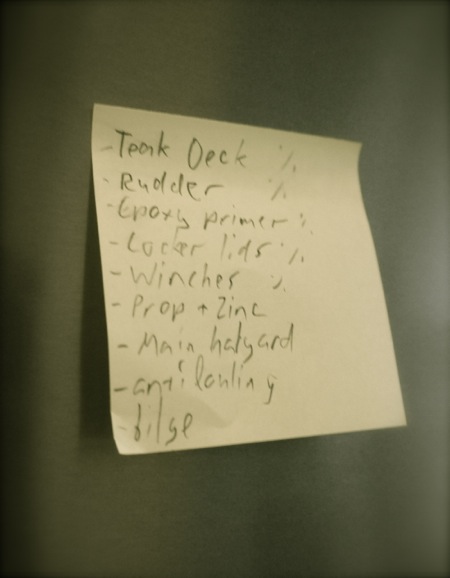
-Teak deck repairs — Check
To-Do list
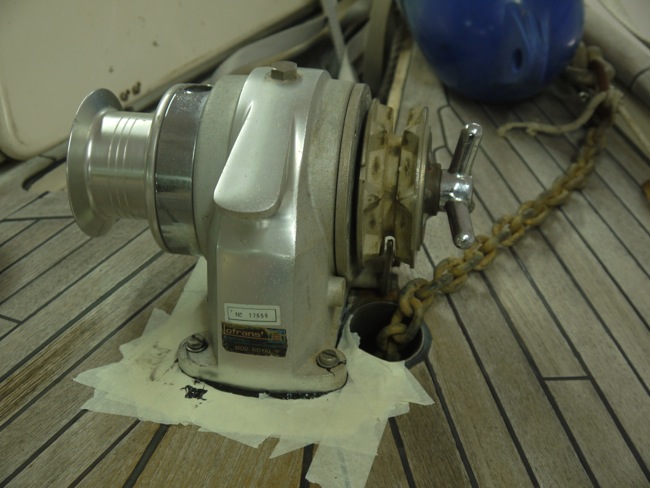
We are on the better side of this winter’s renovation project and the launch is scheduled for the next week. During this week we have been busy with installing the deck vent and anchor windlass, glueing new seals for the locker lids and finishing the teak deck repair.
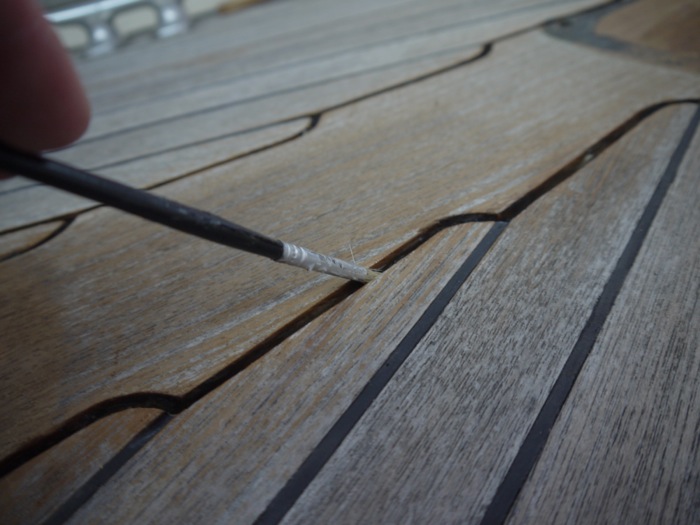
 Speaking of the deck caulking method, previously I have leveled the fresh caulking with a tip of finger (moisten with some washing-up liquid). The good thing with this method is, that if the teak is masked well, there is no need for sanding. However, the job is quite messy and the outcome relays on the masking of the teak. Thus, this time we tried a bit different approach: the new caulking was simply let to dry as it was, standing proud of the teak. After a couple of days, the residuals were cut off with a sharpened trowel to the same level with the teak. In some curved seams, there was need for some sanding, but especially the straight seams were perfect after the cutting.
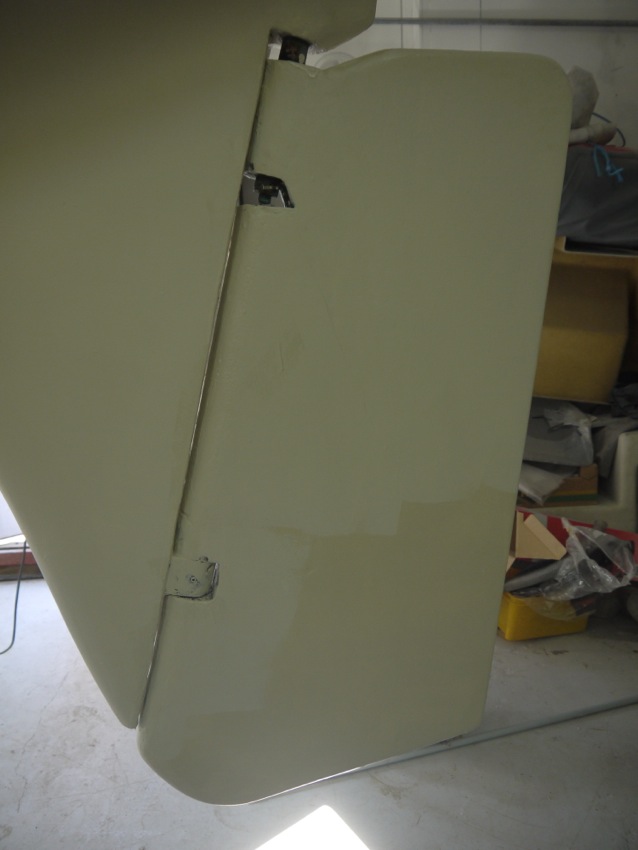
With the rudder, we drilled a couple of holes in the lower part of the rudder as there was about a cup of water trapped inside the blade. To my knowledge, water in the rudder is a common problem with older HR’s (sometimes referred to as the Enderlein drip). In general, this problem is rather common for almost all brands, regardless of how old or new the boat is, as the joint between a fiberglass and metal is difficult to get totally watertight. That is especially true in the case of a rudder, which can be under a great strain when sailing. I think that Baltic Yachts has come up with the best solution so far, as today Baltics have all-composite rudders, and that includes the rudder stock.
Still a lot of things to do, but there is some light visible at the end of the tunnel. Hopefully, at this time of the next week, Dolphin Dance is ready for sailing.
/Antti
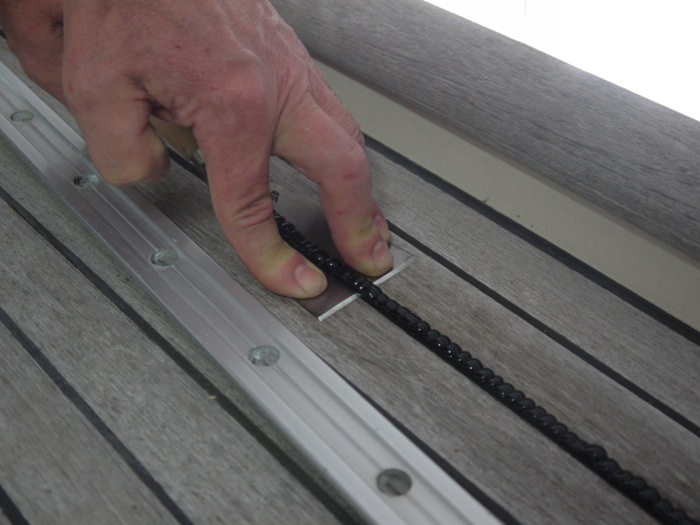 |
| Leveling the residual caulking with a (sharpened) trowel |
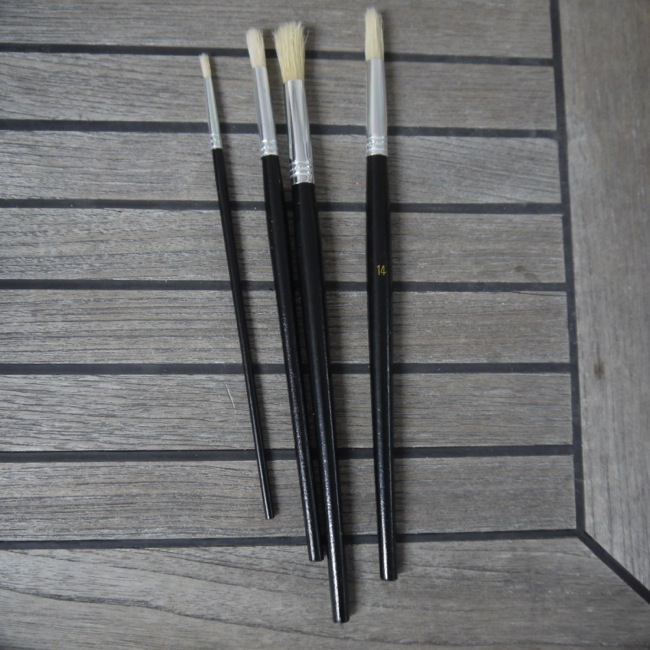 |
| Small brush set is handy for teak deck repairs |
 |
| Applying Sikaflex primer |
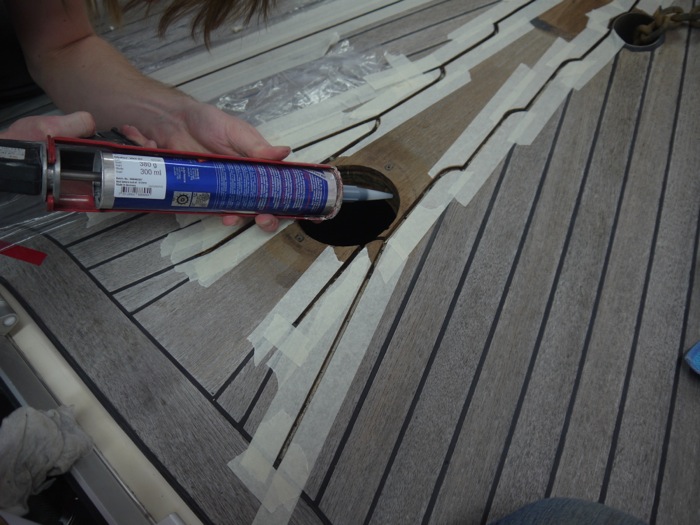 |
| Before installing the deck vent, the deck core was carefully sealed to prevent future leaks. |
 |
| Installing anchor windlass. |

Comments are closed.